Congratulations on Taking the First Step
to More Digital Visibility!
Then next step is to schedule a Strategy session...

Search competition in 2026 is no longer decided by who publishes the most content or checks the most basic optimization boxes. Winning teams are combining search data, AI analysis, technical automation, content operations, and revenue measurement into one connected decision system.
The strongest SEO programs use tools not as dashboards, but as competitive intelligence engines. They reveal what audiences need, how algorithms interpret authority, where competitors are vulnerable, and which actions can create measurable business impact faster than the market can react.
SEO in 2026 is shaped by a more complex search environment than the traditional list of ten blue links. Organic visibility now appears across classic rankings, AI-generated answers, video results, product grids, local packs, forums, image surfaces, knowledge panels, and conversational search experiences. A brand can rank number one for a keyword and still lose attention if the answer box, comparison snippet, or AI overview satisfies the user before the click.
This means competitive advantage depends on understanding search journeys, not just keyword positions. Cutting-edge SEO tools help teams map how a topic appears across every surface, which competitors are repeatedly cited, what formats dominate, and where content gaps exist. The goal is to identify the fastest path to trust, relevance, and visibility across the full search ecosystem.
Modern SEO also requires speed. Algorithm updates, new SERP features, content decay, and competitor campaigns can change the opportunity landscape in days. Teams that rely on quarterly audits often discover problems too late. Teams using real-time monitoring, automated alerts, predictive content scoring, and integrated reporting can move while competitors are still debating what changed.

The biggest mistake companies make is buying tools before defining how decisions will be made. A powerful SEO stack should answer specific strategic questions: Which topics should we own? Which pages are losing value? Which technical issues block indexation or conversion? Which competitors are gaining authority? Which content investments produce pipeline, sales, or customer retention?
A strong 2026 stack usually includes five layers. The first is discovery, which covers keyword research, audience intent analysis, trend detection, and social listening. The second is competitive intelligence, which identifies rival content strategies, link acquisition patterns, SERP ownership, and authority signals. The third is technical diagnostics, which monitors crawlability, rendering, schema, internal links, site speed, and indexation. The fourth is content intelligence, which supports briefs, optimization, quality scoring, and refresh planning. The fifth is measurement, which connects SEO activity to revenue, assisted conversions, brand demand, and customer lifetime value.
Integration matters more than tool count. If keyword data sits in one platform, crawl data in another, content briefs in a document system, and performance metrics in analytics dashboards, teams waste time reconciling information instead of acting on it. The best SEO operations connect these systems through APIs, shared data warehouses, automated workflows, and standardized naming conventions.
AI has changed keyword research from a list-building exercise into a market intelligence discipline. Traditional tools can still show volume, difficulty, and ranking pages, but advanced systems can cluster queries by intent, funnel stage, persona, pain point, entity, and content format. This helps teams understand not just what people search, but why they search and what they expect to find.
For example, a software company targeting “data governance” might discover that the market is split into compliance seekers, enterprise architecture teams, privacy officers, AI governance buyers, and executives researching risk reduction. Each audience needs a different page type, proof point, and conversion path. AI-driven clustering can reveal that one broad topic actually requires a pillar page, several comparison pages, technical guides, glossary assets, use case pages, and executive thought leadership.
The most valuable tools also identify mismatched intent. If a page is optimized for a transactional keyword but the SERP is dominated by educational guides, the page may struggle regardless of on-page quality. Conversely, if competitors over-educate on a query where users want calculators, templates, pricing explanations, or product comparisons, that gap becomes a strategic opening.

Human review remains essential. AI can accelerate research, but it can also misclassify search intent, invent audience assumptions, or overweight common content patterns. Smart SEO teams use AI as an analyst, not as the final strategist. They validate findings against SERP evidence, customer interviews, sales calls, product data, and first-party analytics.
Technical SEO tools have evolved far beyond broken link reports. In 2026, advanced crawlers can render JavaScript, compare mobile and desktop experiences, detect indexation anomalies, analyze internal link equity, validate structured data, flag duplicate content patterns, and prioritize fixes by estimated traffic or revenue impact. This turns technical SEO from maintenance into growth protection.
One of the most important capabilities is continuous monitoring. Large sites change constantly as developers ship features, marketers publish content, ecommerce teams update inventory, and CMS users edit templates. Automated crawls and alerting systems can detect when canonical tags change, robots directives block important sections, schema disappears, internal links break, or high-value pages become slow.
Performance monitoring is also central because user experience signals influence both rankings and conversions. Tools that track Core Web Vitals at the template, device, and geographic level help teams identify where real users face friction. The best programs do not simply chase scores. They connect speed and stability improvements to crawl efficiency, conversion rates, engagement, and revenue.
Technical automation is especially powerful when paired with issue prioritization. Not every warning deserves immediate attention. A missing alt attribute on a low-traffic archive page is not equal to a noindex tag on a revenue-driving category page. Cutting-edge tools assign severity based on page value, search demand, crawl depth, link equity, and business outcomes.
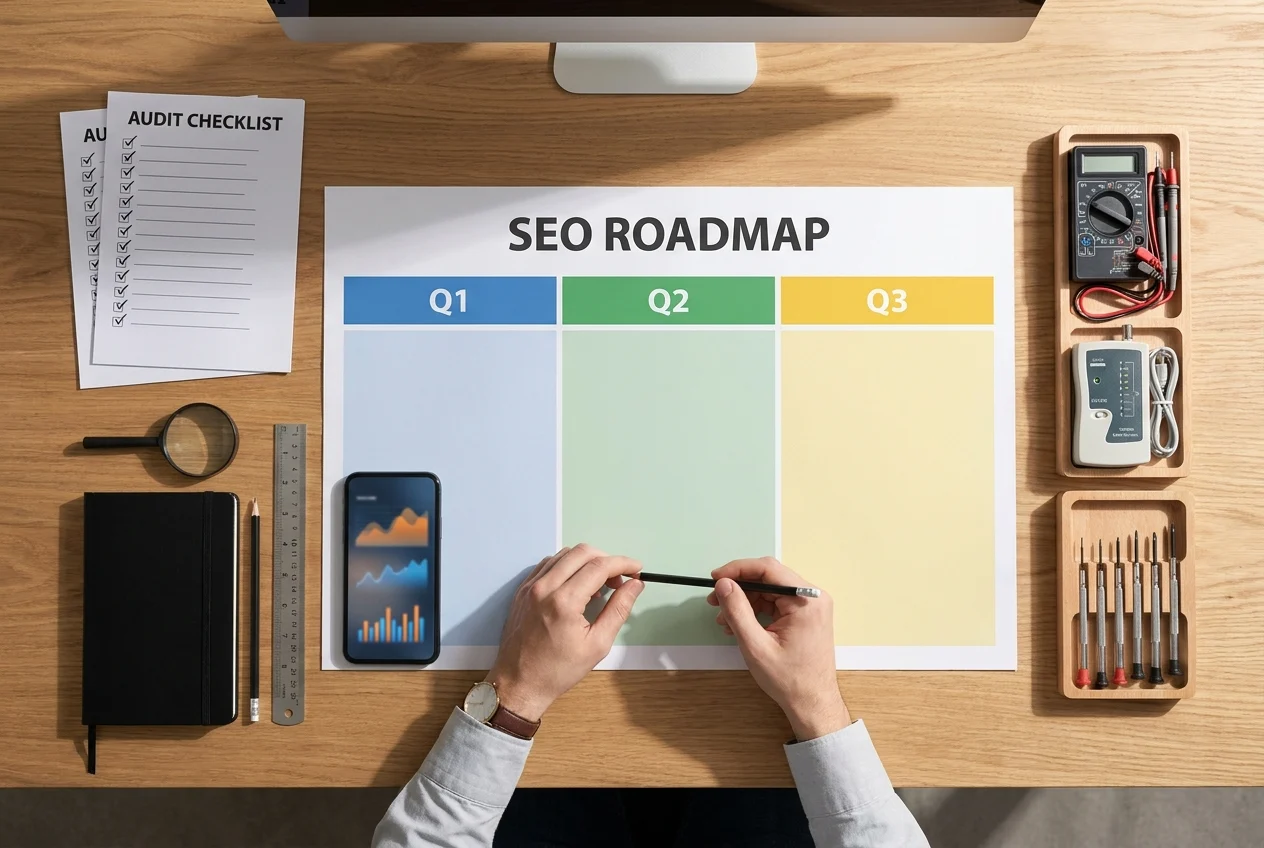
Content tools in 2026 must do more than recommend word counts and related terms. Search systems are increasingly capable of evaluating topical depth, source quality, information gain, entity relationships, and whether content appears genuinely useful. The strongest tools help teams create assets that demonstrate expertise rather than imitate existing results.
Modern content intelligence platforms analyze top-ranking pages, but the goal should not be copying the average. If every competitor has the same definitions, subheadings, and examples, a brand needs original research, sharper frameworks, better visuals, expert commentary, calculators, data tables, templates, case studies, or decision tools. Competitive advantage comes from adding something the SERP does not already contain.
Content briefs should include target audience, search intent, primary entities, supporting questions, internal link targets, source requirements, conversion goals, and differentiation angles. They should also reference foundational search guidance such as Google’s SEO Starter Guide when aligning content quality, accessibility, and discoverability with best practices.
Refresh workflows are just as important as new production. Many sites have years of aging content that still attracts impressions but loses clicks due to outdated examples, weak formatting, declining relevance, or stronger competitor pages. Tools can identify decay by comparing ranking position, click-through rate, impressions, conversions, and SERP feature changes over time. A focused refresh can often outperform a new article because the page already has history, links, and topical relevance.
Search engines and AI answer systems increasingly interpret the web through entities, relationships, and context. A page is not simply a collection of keywords. It is a statement about people, organizations, products, places, processes, problems, and solutions. SEO tools that analyze entity coverage help brands clarify what they are known for and how their content connects across a topic universe.

Entity optimization starts with consistent language. If a site uses five different names for the same service, hides author expertise, or fails to connect related resources, machines may struggle to understand its authority. Tools can audit internal linking, schema usage, author profiles, knowledge graph signals, and topical clusters to reveal where meaning is fragmented.
Structured data is a major part of machine readability. It does not guarantee
rich results, but it gives search systems cleaner evidence about what a page contains and how its elements relate to one another. Product, FAQ, HowTo, Article, Organization, LocalBusiness, Review, and Breadcrumb markup can all reduce ambiguity when implemented accurately. Teams should validate markup against the Schema.org vocabulary and monitor changes after deployments, CMS updates, and template redesigns.
The practical advantage is resilience. When competitors rely only on visible copy, a brand with clear entities, strong internal context, authoritative authorship signals, and accurate structured data gives algorithms more confidence. That confidence can support eligibility for enhanced search features, improve topical association, and make content easier for AI systems to cite or summarize correctly.
Advanced SEO tools make competitor analysis much more precise than checking who ranks above you. They can reveal which pages earn the most links, which topics competitors publish repeatedly, which SERP features they occupy, which pages are gaining impressions, and where their visibility depends on a small number of fragile assets. That intelligence helps teams decide where to compete directly and where to flank the market with underserved angles.
For example, if three competitors dominate broad informational queries but have thin comparison content, a brand can build decision-stage pages with product criteria, implementation checklists, cost models, and objection handling.

The final test of any SEO tool is whether it improves decisions. Rankings, crawl scores, and content grades are useful indicators, but leadership cares about qualified traffic, sales opportunities, customer acquisition cost, retention, and brand demand.
This prevents tool overload. If a platform produces hundreds of recommendations but no clear priority, it creates noise. Competitive advantage comes from disciplined execution: choose the highest-impact opportunities, assign owners, set deadlines, measure outcomes, and feed the results back into the strategy.
Cutting-edge SEO tools are powerful, but they do not replace judgment, creativity, or customer understanding. Their real value is acceleration. They help teams see market shifts sooner, diagnose problems faster, create more useful content, and measure impact with greater confidence.
In 2026, the winners will not be the teams with the biggest software budgets. They will be the teams that connect tools to strategy, integrate data across functions, and act decisively on insights.
Need help with Leveraging Cutting-Edge SEO Tools for Competitive Advantage in 2026?